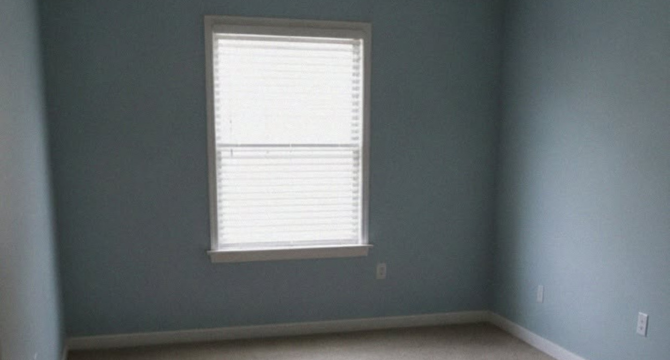
When I bought my first house, everybody told me I had hit the jackpot.
I was twenty-nine, single, and stupidly proud of myself. I had worked for years to get there. The house was not huge, and it definitely was not fancy, but it was mine. Three bedrooms, a little front porch, narrow backyard, and a big maple tree out front that dropped leaves like it had a personal grudge against gutters.
The neighborhood looked perfect in a way that almost felt fake.
Quiet street.
Tall trees.
Good schools.
The kind of place where people waved from porches in the evening and somehow remembered your name after hearing it once.
Most of the people on my block had lived there for decades. You could tell by how easy they were with each other. They did not talk like neighbors. They talked like relatives who had learned how to tolerate one another over a very long time.
At first, I loved that.
Then my next-door neighbor brought over a pie.
Her name was Ruth. She was somewhere in her 70s, with silver hair pinned back and the kind of gentle smile that made you trust her before you knew a thing about her.
“Cherry,” she said, holding out the dish. “I made it this morning. The crust is a little ugly, but it still tastes like pie.”
I laughed. “That is a strong sales pitch.”
She smiled at that and stepped just inside the doorway. Her eyes moved around the entry hall, then toward the staircase, like she was taking inventory.
We made small talk for a few minutes about my job, whether I had family nearby, and how lucky I was to get a house on this street because “people don’t leave once they settle here.”
That line stuck with me.
Not because it sounded threatening. It did not. It just sounded… strange, like she meant it more literally than most people would.
Then, as she turned to leave, she asked, “Which room did you choose?”
I frowned. “Choose for what?”
She looked confused.
“The empty bedroom,” she said.
I laughed because I honestly thought I had misheard her. “I don’t have an empty bedroom.”
Her smile disappeared so fast it made my stomach tighten.
For one long second, she just stared at me.
Then she said, very quietly, “You will.”
I waited for her to laugh. To tell me it was some neighborhood joke. To explain herself. Instead, she stepped backward onto the porch.
“You should leave one room alone,” she said.
“Why?”
But she was already walking away, pie dish towel tucked under one arm, shoulders stiff.
That first night, I walked through my house twice before bed.
Three bedrooms.
Mine upstairs.
A guest room across the hall with unpacked boxes still stacked by one wall. And the smallest bedroom at the end of the hall, which I had turned into my home office. Desk. Laptop. Bookshelves. Lamp. Printer. The whole setup.
Nothing unusual. Nothing creepy. Nothing at all that suggested I had accidentally bought into some weird suburban cult.
The next morning, I carried my coffee upstairs, half-awake, and stopped dead in the hallway.
My office was empty.
Not messy.
Not damaged.
Empty.
Everything that had been inside the room was stacked in the hallway. Neatly. Carefully. My desk chair leaned against the wall. My printer sat on top of a storage bin. My books were arranged in clean little piles. Even the lamp cord had been wrapped instead of left dangling.
For a full minute, I just stood there staring.
Then I checked the front door.
Locked.
Back door.
Locked.
Windows.
All closed.
Nothing broken. Nothing stolen. Nothing missing.
I actually said, out loud, “What the hell?”
I spent the whole morning trying to talk myself into a normal explanation. Maybe I had moved things around late the night before and somehow forgotten. Maybe I had sleepwalked.
Maybe I was more exhausted than I realized.
None of that made sense, but it felt better than anything else.
That evening, I moved everything back.
The next morning, the room was empty again.
Everything was back in the hallway, stacked as neatly as before.
That was the point where it stopped being weird and started being personal.
I installed cameras that afternoon. One in the hallway. One facing the office door. One downstairs near the front entrance.
While I was setting them up, another neighbor wandered over.
His name was Walter. Late 60s, narrow face, always looked like he had just come in from doing some hard and unpleasant job.
He watched me open the camera box and asked, “Problem?”
“You could say that.”
His eyes moved to the house. “That room?”
I looked at him. “You know about it?”
His expression closed immediately.
“I know enough,” he said.
“Then explain it to me.”
He shook his head. “Leave it empty.”
“That is not an explanation.”
“It is the only one that matters.”
I laughed, but there was no humor in it. “You people keep doing that. Acting like I am supposed to already know whatever creepy nonsense everyone else learned years ago.”
Walter glanced up at the second-floor window.
Then he looked back at me and said, “It gets worse if you don’t.”
“Worse how?”
But he had already started walking away.
The next morning, the room was empty again.
I checked the camera footage before work, expecting to finally catch a person sneaking around my house or some glitch that would at least make the whole thing less impossible.
At 2:43 a.m., every camera froze for about 45 second.
When the hallway feed came back, my things were already outside the room.
No person.
No movement.
Just 45 missing seconds and a room that had somehow been cleared out. That was when I stopped thinking of my neighbors as dramatic and started paying attention.
Every house on my street had one bedroom with the curtains always closed. Not just sometimes. Always.
No lights on at night. No signs of use. No furniture visible through the glass. Just one sealed room in every house, like each family had agreed to give up the same piece of the home.
I started asking questions.
No one would answer them.
A woman across the street smiled tightly and said, “You’ll get used to it.”
A man two doors down would not even step inside my office when I asked him to look at the wall where the knocking seemed loudest.
Another neighbor, Denise, said, “Call it superstition if you want. We all did at first.”
“At first?” I asked.
She just looked away.
So I went looking on my own.
I pulled old records. Property documents. Building permits. Original floor plans for every house I could find on the street.
And there it was.
On every single one, one bedroom was labeled with the same two words.
RESERVED ROOM.
No explanation.
No legal note.
No city code.
Just those two words, printed like everyone involved expected them to make sense forever.
That night, I sat in my kitchen staring at copies of the floor plans and got angrier the longer I looked.
I was tired of being afraid of something nobody would explain.
Tired of whispers.
Tired of half-answers.
Tired of that stupid room deciding it could push me around in my own house.
So I made a plan.
At exactly 9:00 p.m. the next night, I dragged my mattress into the room.
I brought my phone, my charger, a flashlight, and a second camera. I set the phone to record. I locked the bedroom door. I sat on the mattress in the middle of the empty floor and waited.
By midnight, I felt ridiculous.
By one-thirty, I felt sleepy.
By two-thirty, I had almost convinced myself I was about to spend the night proving my entire street was afraid of drafts and old wood.
At 2:43 a.m., something knocked.
Not on the bedroom door.
On the wall beside me.
Three slow knocks.
Knock.
Knock.
Knock.
My whole body went rigid.
That wall faced the narrow gap between my house and the one next to it. There was no hallway there. No hidden room. No possible person standing on the other side.
Then my phone buzzed in my hand.
At that exact same moment, the bedroom door slowly opened.
Not a violent jerk. Not a slam. Just a slow, steady swing inward like someone had carefully turned the knob from the outside.
I stared at the dark hallway beyond it, every part of me screaming not to move.
“Who’s there?” I said.
Nothing answered.
I got to my feet, grabbed the flashlight, and stepped into the hall.
Nobody.
The upstairs landing was empty. The stairs were empty. The whole house was silent in that awful way silence gets when it feels like it is waiting for something.
Then I heard it.
A soft series of clicks and tiny shifts from outside, all up and down the street. I went to the front window and pulled the curtain back just enough to see.
Every second-floor bedroom door on the block was open.
Every house.
At the same time.
I could not see into every room, but I could see enough through windows and thin slices of porch light to know I was not imagining it. One upstairs bedroom in every house stood open to a dark, unused room.
Then, 30 seconds later, every door quietly swung shut.
I did not sleep at all after that.
The next morning, I went straight to Ruth’s house.
She opened the door before I even knocked the second time.
“You saw it,” she said.
It was not a question.
“Yes,” I snapped. “And I am done with everybody acting like this is normal.”
She stepped aside and let me in.
Walter was already there, along with Denise and a heavyset man named Luis from across the street. They were all sitting around Ruth’s dining table with coffee cups in front of them, which told me this conversation had happened before. Maybe dozens of times. Maybe with every new homeowner who had been stubborn enough to push.
I stayed standing.
“Tell me what is happening.”
Walter folded his arms. “We can tell you what happens. We can’t tell you why.”
“Then tell me what happens.”
Ruth answered first. “The room won’t stay used.”
Denise said, “Things get moved. Doors open.”
Luis rubbed one hand over his mouth. “Cameras fail. They always fail right when it starts.”
“And this happens every night?” I asked.
“At 2:43,” Ruth said.
“For how long?”
She looked down at her coffee. “Since before I moved here. I came in 1982.”
I stared at them. “And none of you ever figured it out?”
“We stopped trying,” Walter said.
“Why?”
His laugh had no humor in it. “Because after a while you care more about sleeping than solving it.”
That should have been enough.
It should have been.
But once I knew the entire street had surrendered to this thing without understanding it, I couldn’t let it go.
I took time off work and buried myself in archives.
Town records.
Old newspapers.
Engineering permits.
Development maps from before the neighborhood was built.
Most of it was useless. Dead ends. Boring paperwork. Long-forgotten names.
Then, in a box of municipal planning files from the 1970s, I found an old engineering packet with half the pages missing and coffee stains on the cover.
The phrase that caught my eye was “centralized pressure-balancing system.”
I called Nate.
Nate was one of my oldest friends. He was 31, an engineer, and exactly the kind of person you wanted around when something made no sense because he refused to accept mystery if bad design could explain it first.
He came over that night, spread the documents across my kitchen table, and spent 20 minutes reading in total silence.
Finally, he leaned back and said, “This is the dumbest thing I have ever seen.”
“In a haunted way or an engineering way?”
He looked at me. “Engineering way. Which is worse.”
He explained it piece by piece.
Before the neighborhood was finished, the developer had built an experimental ventilation and pressure-balancing network that linked every house on the street through hidden utility shafts inside one upstairs bedroom wall. The idea had been to stabilize airflow and reduce heating and cooling costs across the whole block.
It had never been completed.
But it also had never been fully removed.
“Sealed doesn’t mean disconnected,” Nate said. “If parts of the system still link the houses, pressure changes can still travel through it.”
I stared at him. “You think that is what’s been happening?”
“I think your ghost is trapped in old ductwork.”
The more he dug, the more it fit.
The knocking in the walls.
The doors opening.
The camera glitches.
The way the smallest room was always the worst place to use because pressure changes hit that space hardest and could shift lightweight furniture across smooth floors.
We traced the records further and found the missing piece: an aging municipal pumping station still cycling automatically every night through part of the abandoned network.
At 2:43 a.m.
Every single night.
I sat there staring at the diagrams while this massive, stupid, perfect answer unfolded in front of me.
All those years.
All those families.
All that fear.
And underneath it was a failed infrastructure project everybody had forgotten how to explain. Once the first families gave up and left the room empty, the habit became a rule. Then the rule became a superstition. Then the superstition swallowed the truth.
The next part took meetings with the town, public works, and enough annoyed phone calls to make me briefly understand why people set things on fire in frustration.
But eventually the city agreed to test the theory.
For one night, they temporarily shut down the old system.
That evening, the whole street felt tense. People stood on porches pretending they were not waiting. Lights stayed on later than usual.
Ruth came over just before midnight and sat in a folding chair in my hallway like we were waiting for fireworks.
At 2:43 a.m., nothing happened.
No knocking.
No door moving.
No camera freezing.
Just silence.
Real silence.
Ruth let out a breath and said, very softly, “Well. I’ll be damned.”
I laughed then. Not because it was funny. Because the relief hit so hard, it had to come out somehow.
The town permanently decommissioned the old system a week later.
After that, the street started changing.
Curtains opened. One family painted their old Reserved Room yellow and turned it into a nursery. Luis made his into a music room. Denise filled hers with books. Walter turned his into a workshop, though he admitted he still did not love spending long in there.
As for me, I moved my office back in.
Desk.
Laptop.
Lamp.
Bookshelves.
Everything stayed where I put it.
No more stacked hallway. No more missing seconds on camera. No more 2:43 dread sitting in my chest like a hand.
A few days later, Ruth stopped by with another pie.
This time she walked all the way upstairs with me and stood in the doorway of the office, looking around like she still expected the room to reject us both.
Then she smiled.
“I always knew somebody would finally ask the right question,” she said.
I leaned against the desk. “You could have just told me.”
She gave me a look. “Would you have believed me?”
I thought about that for a second.
“No,” I said.
“Exactly.”
She stood there a little longer, one hand resting on the doorframe.
“I still don’t like these rooms,” she admitted.
“Because of the old system?”
She shook her head. “Because when you live by a rule long enough, it stops feeling like a rule. It starts feeling like part of your bones.”
Then she went home.
Sometimes I still wake up around 2:43 for no reason.
I lie there in the dark and listen.
No knocks. No drifting door. No movement upstairs.
Just an ordinary house in an ordinary neighborhood, finally acting like one.
And somehow, that still feels like the strangest part.