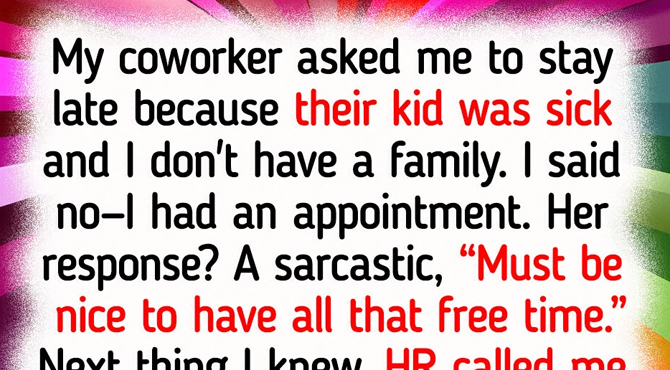
We recently heard from a reader who shared a story that started with a simple favor—but ended with an HR warning.
Here’s the letter.
“It started with one shift. A coworker asked if I could stay late because their child was sick. I agreed—no big deal. I don’t have kids, and I figured it was just a one-time thing.
Then it happened again. And again. It became this silent expectation that I’d step in every time there was a family emergency. I stopped getting asked. They’d just leave early with a quick “Thanks, you’re the best.”
At first, I brushed it off. But after the fifth time, I realized my own plans—appointments, social time, even just going home on time—weren’t seen as important. Apparently, not having children meant I was the default backup.
Eventually, I said I couldn’t cover. I had a dentist appointment I’d already rescheduled twice. The response? A sarcastic, “Must be nice to have all that free time.” That stung more than I expected.
A few days later, I got called into HR. I was told someone had raised concerns that I wasn’t being “team-oriented” and wasn’t supporting a colleague through personal difficulties. When I asked if declining overtime now counted as misconduct, they dodged the question and said I should “consider being more flexible.”
So now I’m labeled difficult—not because I was rude or unreliable—but because I dared to set a boundary.
Psychological insight
This dynamic can foster a toxic work environment, eroding psychological safety—the belief that one can express themselves without fear of negative consequences. When child-free employees set boundaries, they’re sometimes labeled as uncooperative, which can lead to burnout and quiet quitting, where employees disengage to protect their well-being. Such environments can diminish job satisfaction and increase turnover rates.
To cultivate a healthier workplace, it’s essential to recognize and address these biases, ensuring that all employees, regardless of parental status, are treated equitably and their boundaries respected.
Because in the end, being child-free doesn’t mean being commitment-free—and it certainly doesn’t mean being everyone else’s backup plan.